Traditional braces are fixed orthodontic appliances that use metal brackets, archwires, and elastic bands to straighten teeth. Modern braces include options like Invisalign clear aligners, ceramic braces, and self-ligating systems that offer different aesthetics and mechanics while achieving similar results.
Comparing traditional and modern braces options for every age starts with understanding what each system actually does. When you start researching orthodontic treatment, you’ll quickly discover that today’s choices go far beyond the metal braces you might remember from childhood.
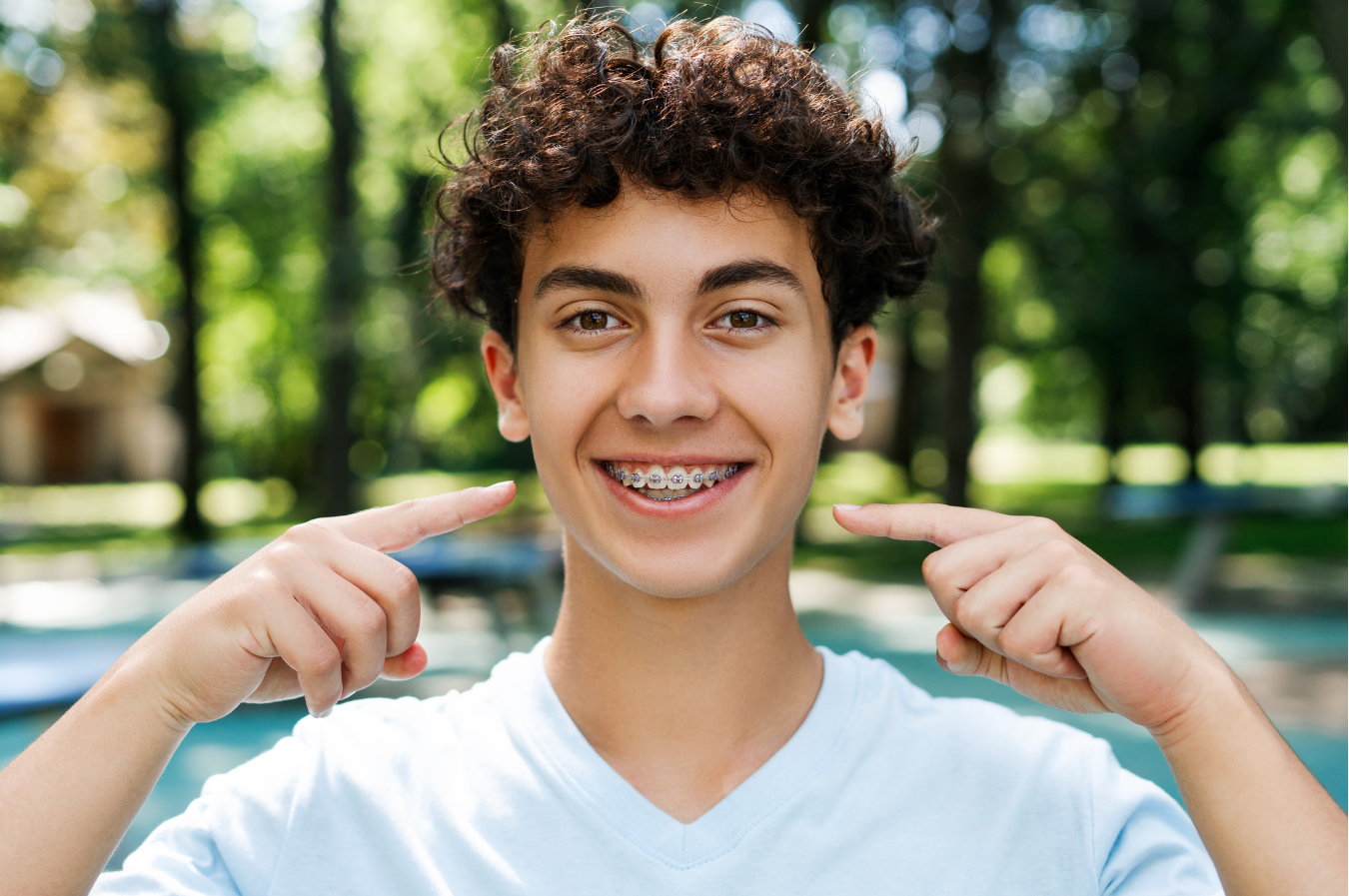
Traditional braces use metal brackets bonded directly to each tooth, connected by archwires and secured with elastic bands. This system has straightened smiles successfully for over 50 years and remains one of the most effective approaches for correcting complex alignment issues.
Modern options have expanded your choices significantly. Invisalign clear aligners use a series of custom-fitted, removable trays that gradually shift teeth into position. Ceramic braces work like traditional metal systems but use tooth-colored or clear brackets that blend with your smile. Self-ligating braces eliminate elastic bands entirely, using specialized clips to hold the archwire in place.
Both traditional and modern approaches correct the same underlying issues: crowding, gaps, overbites, underbites, crossbites, and general misalignment. The difference lies in how they achieve these results and what the experience feels like during treatment.
Several factors go into any treatment recommendation. Case complexity matters most. So do your lifestyle, your age, and what you hope to achieve. A teenager involved in contact sports might have different needs than an adult professional who presents to clients regularly. A board-certified orthodontist evaluates each patient individually, considering dental anatomy, bite relationship, and personal goals before suggesting whether traditional or modern braces will serve you best.
How Traditional and Modern Braces Work: The Treatment Process Step by Step
Understanding how each system actually moves your teeth helps you know what to expect throughout treatment. While the end goal is the same, the mechanics differ in important ways.
How Do Traditional Braces Apply Continuous Pressure?
Traditional braces work by applying steady, controlled pressure to your teeth over time. Here’s how the process unfolds:
- Initial bonding appointment: Metal or ceramic brackets are attached to each tooth using dental adhesive.
- Archwire placement: A thin metal wire threads through each bracket, creating the force that guides tooth movement.
- Elastic bands: Small rubber bands connect brackets to the archwire and may link upper and lower teeth for bite correction.
- Regular adjustments: Every 4 to 8 weeks, the archwire is tightened or replaced to maintain pressure. Most patients describe this as mild soreness that fades within a day or two.
- Refinement phase: As teeth approach their final positions, adjustments become more precise and targeted.
This fixed system works around the clock. You can’t remove traditional braces, which means consistent force application throughout treatment. That’s a real advantage for patients who don’t want to think about compliance.
How Do Modern Clear Aligners Work?
Invisalign clear aligners take a different approach, and the steps look a bit different too:
- Digital scanning: Advanced 3D imaging captures your teeth’s exact positions without messy impressions.
- Custom treatment plan: Software maps the precise movements needed and generates a series of aligners, which are reviewed and adjusted by your orthodontist before anything is made.
- Aligner progression: You wear each set of aligners for 1 to 2 weeks before switching to the next. Each tray makes small, targeted shifts.
- Removability: Take aligners out for eating, brushing, and special occasions, then pop them back in.
- Check-in appointments: Visits may be less frequent, and virtual monitoring tools allow remote check-ins between appointments.
Both systems require an initial assessment that includes imaging and a treatment plan created by your orthodontist. Average treatment duration ranges from 12 to 24 months, though your specific timeline depends on what needs correction. Advanced digital tools walk you through each step so you know exactly what to expect from day one.
Benefits of Each Approach: Why Patients Choose Traditional or Modern Braces
Every orthodontic option offers distinct advantages. The best choice depends on your specific situation, not on which system is “better” overall. A board-certified orthodontist can help you weigh these advantages during a free consultation.
Why Do Patients Choose Traditional Braces?
- Handles complex cases effectively: Severe crowding, significant rotations, and complicated bite corrections often respond best to traditional braces.
- Since you can’t remove them, treatment progresses regardless of patient cooperation. This is especially helpful for younger kids who might forget to wear removable appliances.
- Decades of published research support their effectiveness across virtually every orthodontic situation, making results predictable for all case types.
- Traditional metal braces typically represent the most affordable baseline cost for orthodontic treatment.
- Fun for kids and teens: Choosing colorful elastic bands at every adjustment appointment lets younger patients express their personality.
Why Do Patients Choose Clear Aligners?
- Near-invisible aesthetics: Most people won’t notice you’re wearing them during normal conversation.
- You can remove them for eating, which means zero food restrictions. Enjoy popcorn, apples, whatever you want.
- Brushing and flossing works just like normal, no special tools needed to work around brackets and wires.
- Fewer emergency visits since there are no brackets to break or wires to poke.
- Remote monitoring tools: Virtual care options reduce in-office visits while keeping treatment on track.
Why Do Patients Choose Ceramic or Self-Ligating Systems?
- Ceramic braces blend with your tooth color for a subtler appearance than metal while still handling complex cases with the strength of a fixed system.
- Self-ligating braces can reduce friction during tooth movement and may require fewer adjustment appointments, which many busy families appreciate.
According to the American Association of Orthodontists, the right treatment depends on individual factors that only a professional evaluation can assess. What works beautifully for one patient might not suit another at all.
Traditional Braces vs. Modern Options: A Side-by-Side Comparison for Every Age
Choosing between orthodontic treatments involves weighing multiple factors against your priorities. A board-certified orthodontist can determine which option fits your case best, but this comparison gives you a strong starting point.
How Do the Options Compare Feature by Feature?
| Feature | Traditional Metal Braces | Ceramic Braces | Invisalign Clear Aligners |
|---|---|---|---|
| Visibility | Most noticeable | Subtle, tooth-colored | Nearly invisible |
| Removability | Fixed throughout treatment | Stays on the whole time | Removable for eating and cleaning |
| Food Restrictions | Yes (avoid hard, sticky foods) | Yes (avoid hard, sticky foods) | None, just remove to eat |
| Oral Hygiene | Requires special brushing techniques | Needs extra care around brackets | Normal brushing and flossing |
| Case Complexity | Handles all cases | Handles most cases | Best for mild to moderate cases |
| Compliance Required | Low (always working) | Low (always working) | High (must wear 20-22 hours daily) |
| Ideal Age Groups | Kids, teens, adults | Teens, adults | Teens, adults (Invisalign First for kids) |
What Are the Age-Specific Considerations?
For Kids (Ages 7-12)
Young kids may benefit from early interceptive treatment before all permanent teeth arrive. Palatal expanders can guide jaw growth, and limited braces can address specific problems. Invisalign First now offers a clear aligner option designed specifically for growing kids with mixed dentition.
Traditional braces often work well at this age because compliance isn’t a concern. Kids don’t need to remember to wear their appliance. Many enjoy choosing colorful elastic bands.
For Teens
Teens have more options than ever. With most or all permanent teeth in place, they can choose between traditional metal braces with personality-expressing color options, ceramic braces for a less noticeable appearance, or Invisalign for Teens, which includes compliance indicators and replacement aligners for the occasional lost tray.
The right choice often depends on the teen’s maturity level and willingness to wear aligners consistently. Some teens thrive with that responsibility. Others do better with fixed braces that work automatically.
For Adults
Adults frequently prefer Invisalign clear aligners for professional and social reasons. Many feel self-conscious about metal braces in workplace settings or during important life events.
That said, adults with more complex orthodontic needs may find that traditional or ceramic braces deliver better results. During your evaluation, your orthodontist can show you what’s achievable with each option for your specific case. Board-certified orthodontists help patients of every age find the right fit.
What Affects the Cost of Braces? Key Pricing Factors to Consider
The cost of orthodontic braces depends on five primary factors: treatment complexity, duration, type of braces chosen, geographic location, and orthodontist expertise. Complex cases requiring longer treatment cost more, and premium options like ceramic braces or Invisalign clear aligners typically cost more than traditional metal braces.
What Are the Primary Cost Drivers?
Treatment complexity and duration affect cost more than any other factor. A mild spacing issue requiring 12 months of treatment costs less than severe crowding that takes 24 months to correct. More complex cases require more materials, more appointments, and more of your orthodontist’s skill.
The type of braces you choose also impacts price. Traditional metal braces typically represent the most affordable baseline option. Ceramic braces cost more due to the specialized bracket material. Invisalign clear aligners and other clear aligner systems have become more competitive in recent years, often falling within a similar range as ceramic braces.
Board-certified orthodontists complete two to three years of additional residency training beyond dental school. That focused education in tooth movement, jaw development, and bite correction directly influences the quality of your results.
How Can You Make Treatment Affordable?
Many families worry about orthodontic costs, but several options can help:
- Insurance coverage: Many dental plans include orthodontic benefits that significantly reduce out-of-pocket expense.
- Flexible payment plans spread costs over the treatment period, making monthly payments manageable for most budgets.
- You can also use HSA and FSA accounts to cover orthodontic treatment with pre-tax dollars.
- Third-party financing through dental loan providers offers another layer of flexibility when needed.
Financing for orthodontic treatment and online payment portals make managing your investment convenient. The only way to know your actual cost is through a free consultation. An orthodontist will evaluate your specific needs and provide a detailed estimate. Most practices include x-rays in the initial assessment at no extra charge.
Who Is a Good Candidate? Braces Options by Age and Dental Need
Good candidates for braces include kids as young as 7, teens with permanent teeth, and adults of any age, though the best option depends on case complexity, lifestyle, and personal goals. Understanding candidacy helps you arrive at your free consultation with realistic expectations.
Who Is a Candidate by Age Group?
Kids (Starting at Age 7)
The American Association of Orthodontists recommends kids have their first orthodontic evaluation by age 7. At this age, an orthodontist can:
- Identify developing problems before they become severe
- Guide jaw growth while bones are still malleable
- Create space for permanent teeth to emerge properly
- Address harmful habits like thumb-sucking before they affect alignment
Early treatment doesn’t mean every 7-year-old needs braces. Many kids simply benefit from monitoring until the right time for treatment arrives.
Teens (Ages 12-18)
Once permanent teeth have fully erupted, teens become candidates for virtually all orthodontic options. The best choice depends on:
- Case complexity (severe issues may require traditional braces)
- Maturity and responsibility level (aligners require consistent wear)
- Lifestyle factors (athletes in contact sports may prefer aligners)
- Aesthetic preferences (some teens embrace colorful braces; others want invisibility)
Adults (Any Age)
Adults with mild to moderate misalignment often make ideal Invisalign clear aligner candidates. Clear aligners fit right into professional and social life without drawing attention.
That said, adults with severe skeletal issues, significant bite problems, or complex tooth movements may achieve better results with traditional or ceramic braces. Age alone doesn’t limit your options. Your dental anatomy does.
What Special Considerations Should You Know?
Certain conditions require evaluation before starting orthodontic treatment:
- TMJ dysfunction: Jaw joint issues should be assessed and potentially addressed before or during orthodontics
- Gum disease: Periodontal health must be stable before moving teeth
- Missing teeth: Treatment planning must account for gaps and potential replacements
- Previous restorations: Crowns, bridges, and implants affect treatment options
A board-certified orthodontist conducts this evaluation at every free consultation. The initial assessment covers your full dental picture so nothing gets overlooked. This is also the time to ask questions about timelines, costs, and what daily life looks like with each type of braces.
Frequently Asked Questions About Braces Options
Are modern braces faster than traditional braces?
Not necessarily. Treatment speed depends primarily on case complexity, not the type of braces you choose. For mild alignment issues, Invisalign clear aligners can sometimes achieve results more quickly because they’re designed for efficiency in straightforward cases. Complex bite corrections, though, often progress at similar rates regardless of the system.
Can adults get traditional braces?
Absolutely. Adults of any age can benefit from metal or ceramic braces. Traditional braces remain the most proven fixed option for complex adult cases involving significant bite correction or severe crowding. Many adults choose ceramic braces for a more subtle appearance while still getting the power of a fixed system.
Is Invisalign effective for kids?
It can be, yes. Invisalign First is specifically designed for growing kids with mixed dentition, meaning they still have some baby teeth. This system addresses common childhood orthodontic issues while accommodating the unique needs of developing mouths. Compliance matters more with younger kids, though, since aligners must be worn consistently.
Do modern braces hurt more than clear aligners?
They cause similar levels of temporary discomfort, typically described as pressure rather than actual soreness. Aligners often feel less intrusive since there are no brackets or wires that might irritate cheeks and lips. The adjustment period for both systems typically lasts just a few days after each change or tightening.
How do I know which option is right for me?
The best way to find out is during a free consultation. The evaluation covers your teeth, bite relationship, jaw structure, and overall oral health. From there, you’ll discuss your goals, lifestyle, and concerns before reviewing options that can achieve the results you want. That conversation is what helps you choose a treatment that truly fits your needs.
If you’re considering orthodontic treatment for yourself, your teen, or your younger child, the first step is always a professional evaluation. Board-certified orthodontists take time to understand your goals and explain which options can help you achieve the smile you want. A free consultation gives you the information you need to move forward with confidence, whether that means starting treatment now or simply knowing your options for the future.